
/socialsamosa/media/media_files/2025/08/20/leaderboard-new-3-2025-08-20-14-33-18.png)

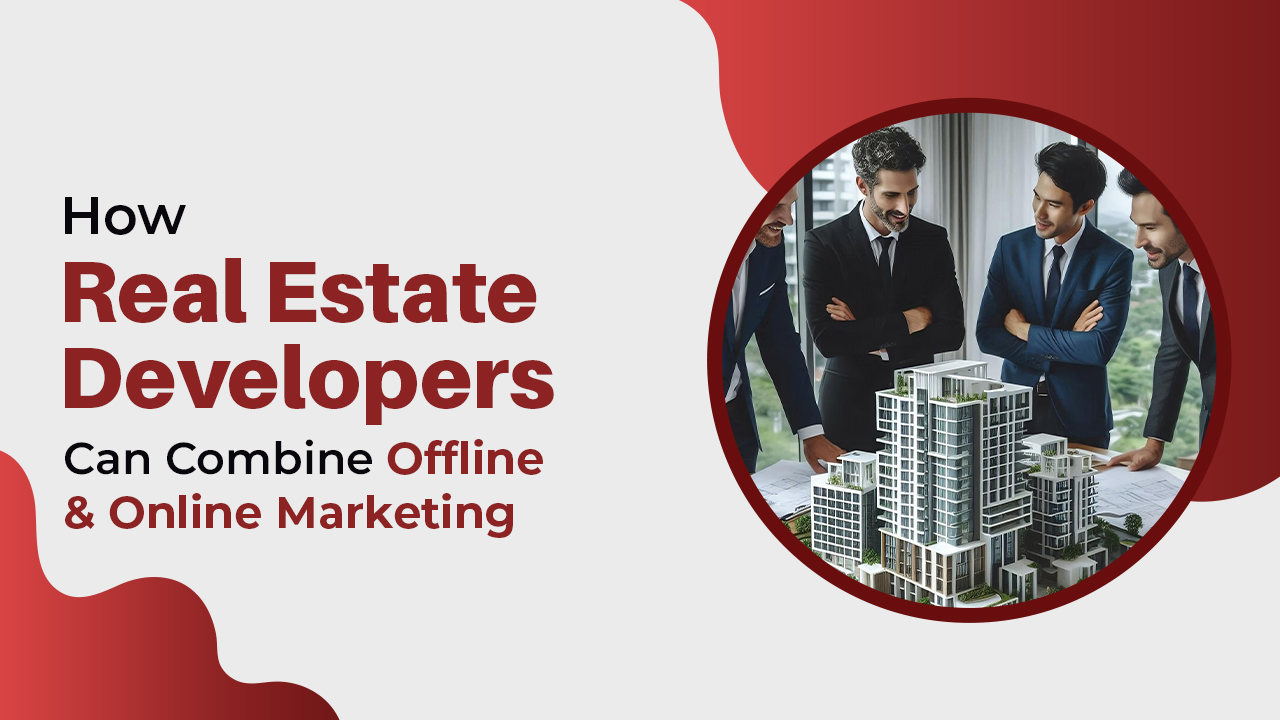
The world of marketing seems to offer two paths: the old-school way (like billboards and brochures) or the new digital way (like websites and social media). For property developers, picking just one is a mistake. The best plan doesn’t choose between them. It uses them together as one complete strategy. Think of it as building a single road for your customer. This combined approach smoothly takes someone from first hearing about your project all the way to signing the contract.
Think of it this way. A person might see a billboard for a new condo while driving home. Later, they search for it on their phone. They visit the website, look at a virtual tour, but want to see the real site. They visit the sales office on Saturday. On Monday, they get a helpful email with more details. This seamless experience is the goal. It blends offline and online marketing for real estate into one customer journey.
Why Integration is the Only Strategy That Works
The old debate of traditional vs digital marketing in real estate is over. Today’s buyers use both worlds constantly. They read a magazine, then Google the developer. They hear about a project from a friend, then check its reviews online. Your marketing must work the same way.
A disconnected approach creates problems. Your stunning brochure says one thing, but your website shows different prices. A social media ad promotes a lifestyle your sales office staff cannot describe. This confuses people. It breaks trust. Your real estate developers marketing plan must be unified from the start. Every piece, whether a newspaper ad or an Instagram story, must tell the same clear story.
Building Your Foundation: One Message, Everywhere
Before any campaign begins, lay a strong foundation.
1.Lock down your core message and visual identity. Your project’s name, logo, colors, and key promises must be identical everywhere. The font on your signage should match the font on your website. The sales pitch at the model unit must reflect the captions on your online videos.
2.Map the customer’s path. Write down every single point where someone might meet your project. This list includes:
- Billboards and bus stop ads.
- Newspaper features.
- Your website and social media profiles.
- The sales office and model unit.
- Email newsletters.
- Word-of-mouth from existing clients.
See how these points connect. Your goal is to make moving from one to the next effortless.

Strategy One: Move People from Online to Offline
A primary goal of your property developer marketing ideas should be to turn digital interest into a physical visit. The online world is for discovery. The offline experience is for closing the deal.
1.Start with search. Make sure your project appears when people search online. Use local SEO. Claim your Google Business Profile listing. Post photos, accurate addresses, and phone numbers. This helps someone who searches “[Your City] new condos” find you and get directions easily.
2.Use targeted ads to invite people in. Social media platforms allow for precise targeting. A powerful real estate advertising tip is to use “geo-fencing.” You can serve digital ads to people’s phones when they are in a specific area, like near a competing development or a popular mall. The ad can offer a direct link to book a site tour.
3.Your website must work hard. It is your 24/7 sales office. Each page should have a clear purpose. Make actions simple.
4.Create online content that builds excitement for the real thing. A high-quality 3D virtual tour is excellent. It lets people explore from home. But it should make them think, “This is great. I need to see it in person.” Use video to show the construction progress, the views from the site, and the surrounding neighborhood.
Strategy Two: Use Offline to Boost Online Engagement
The relationship works both ways. Every offline interaction should lead to a deeper online connection. This keeps your project in the buyer’s mind after they leave.
The simplest tool is the QR code. Place these square barcodes on every offline material.
- On a billboard: QR code links to the website’s gallery.
- In a brochure: QR code opens the specific floor plan.
- In the model unit: QR code leads to a video about the finishes.
A person can scan with their phone and instantly get more information. It bridges the gap perfectly.
Follow up intelligently after a site visit. When a visitor registers at your sales office, get their email address. Send an automatic, personalized email that same evening. Thank them for coming. Attach the floor plan they liked. Include a link to the virtual tour they saw. This reinforces their memory and provides easy reference.
Amplify your events. If you host a launch party or an open house, use online tools to make it bigger.
- Before: Create a Facebook event. Send email invitations.
- During: Use a unique hashtag for the event. Encourage guests to post photos. Display these live social media posts on a screen in the venue.
- After: Share a photo album online. Send a follow-up email with next steps.
This turns a one-day offline event into a week-long online conversation.
Read More –10 Real-Estate Marketing Ideas That Work Right Now
Making the System Work Together: The Feedback Loop
Integration is not a one-way street. Information must flow back and forth to create a true system.
- Gather online reviews from offline clients. After a buyer purchases a unit, ask them to write about their experience. Request reviews on your Google Business Profile, Facebook page, or industry websites. This social proof is crucial for new buyers researching you online.
- Showcase this proof offline. Display these positive online reviews on a monitor in your sales gallery. Print compelling testimonials in your brochures. This shows credibility that was earned offline and verified online.
- Track everything in one place. This is a key technical step. You need a shared system, often called a CRM. Put every single customer contact into this system:
- Their first click on your website.
Their call to your office.
Their visit to the model home.
The emails they read.
Why does this matter? It lets you personalize.
- Your sales agent can see that a visitor looked at the two-bedroom plan online. They can start the conversation about that plan right away.
- If a person toured but didn’t buy, you can send them a special online ad. The ad can mention a new offer or promotion.
- For your team, the difference between offline and online vanishes. They see one complete story. For the client, every step feels connected and smooth.
Conclusion: Building Your Unified Approach
Successful real estate marketing strategies today are not about choosing a side. They are about building bridges. The gap between seeing an ad on a highway and clicking a link on a phone must be invisible to your customer.
Your property developer marketing ideas should focus on this connection. Audit your current efforts. Look at your offline materials. Do they have a clear QR code or website link? Look at your website. Does it make booking an offline tour the easiest possible action?
Start with one bridge. Perhaps it is adding QR codes to all your print ads. Or setting up an automatic follow-up email after a site visit. Measure the result. Then build the next bridge.
By combining offline and online marketing for real estate, you create a consistent, professional, and convenient journey. You meet the modern buyer where they are—everywhere. This integrated approach is no longer just a good idea. It is the standard for how real estate developers connect with people, build trust, and ultimately, sell properties.

/socialsamosa/media/media_files/2025/08/20/social-media-calender-2025-08-20-14-53-00.jpeg)


