
/socialsamosa/media/media_files/2025/08/20/leaderboard-new-3-2025-08-20-14-33-18.png)

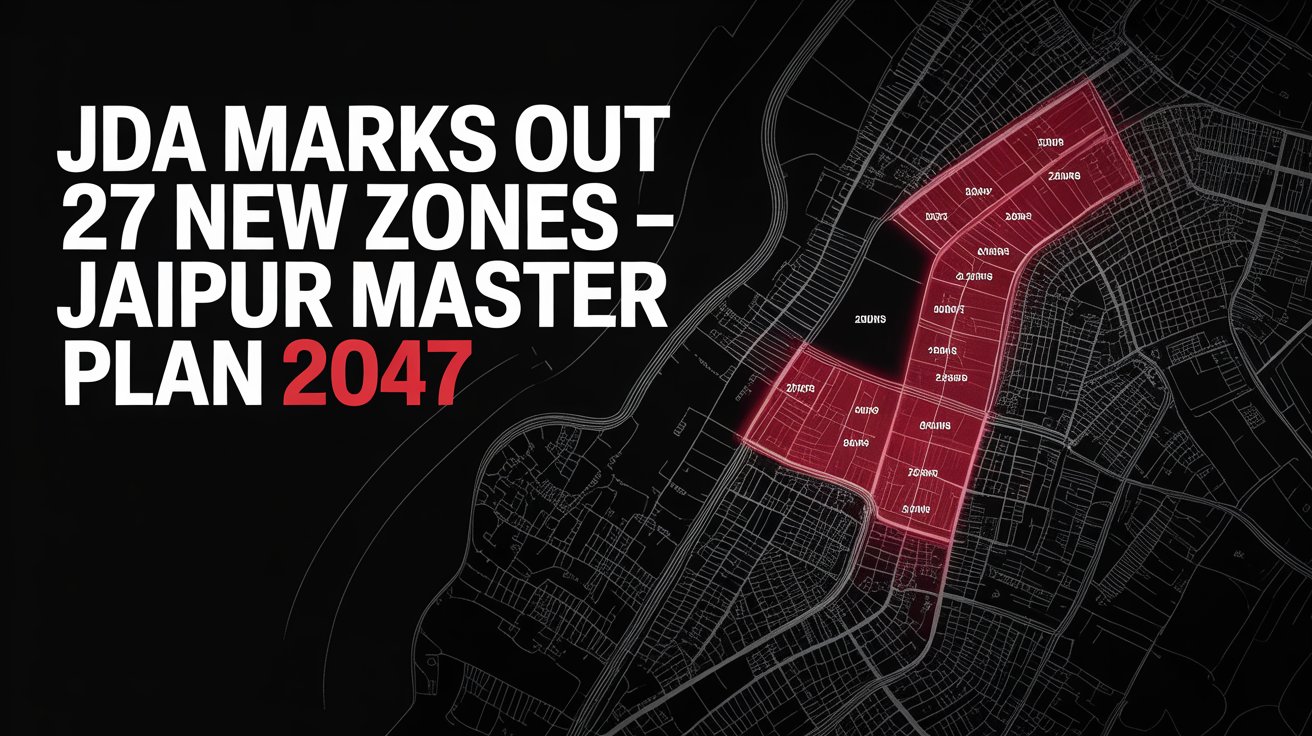
The Jaipur Development Authority (JDA) has taken a major step under the Jaipur Master Plan 2047, officially marking out 27 new zones to streamline development and manage the city’s rapid expansion. This restructuring aims to ensure better planning, efficient administration, and smoother urban growth as Jaipur continues to evolve into a modern metropolitan city.
Why the Sudden Increase in Zones?
Jaipur earlier had 18 zones, but with the city spreading rapidly toward the outskirts, the current zoning wasn’t enough to handle the growing population and development needs. To address this gap, JDA increased the number of zones by 11. However, due to merging four Prithvi (PRN) zones into two, the final count stands at 27.
Officials confirmed that new maps were sanctioned and the zones were officially demarcated recently, marking a significant milestone in the city’s long-term development plan.
Core City Zones Remain the Same
Interestingly, the heart of Jaipur—Zones 1 to 8—remains unchanged. These areas include some of the most developed and busy parts of the city such as:
- C-Scheme Bypass
- 200-Feet Bypass
- ISKCON Road
- Jhalana Bypass
These zones fall within Jaipur’s old ring road and already have a well-established urban infrastructure. Since they are structurally sound and optimally planned, no major alterations were needed.
What’s New in the Updated Zones?
Most changes appear in the middle and outer zones, especially where Jaipur is expanding the fastest.
Zones 9, 10, and 11 – Minor Yet Important Updates
- Zone 9: New villages from Sanganer Tehsil have been added.
- Zone 10: Several Bassi Tehsil villages now fall under JDA planning.
- Zone 11: Small boundary adjustments were made to align with new planning requirements.
These changes reflect Jaipur’s increasing urban footprint, pulling previously rural belts into the scope of planned development.
Big Additions in Zones 15–25
The biggest expansion is seen in Zones 15 to 25, where most new villages included in Master Plan 2047 are located. These zones represent Jaipur’s next major growth corridors, expected to see major residential, commercial, and infrastructural development over the coming decades.
Impact on Urban Development
The new zoning is expected to transform how Jaipur grows. With smaller, more manageable zones, JDA will now be able to:
- Deliver faster administrative services
- Ensure balanced and organised development
- Improve infrastructure like roads, drainage, water supply, and public spaces
- Prevent unplanned and haphazard expansion
For residents and investors, this change signals more clarity, smoother construction approvals, and improved future property value—especially in newly added zones.
Administrative Changes by JDA
With more zones comes more responsibility. Until new officers are appointed, the existing divisional commissioners handling the original 18 zones have been temporarily assigned the responsibility of all 27 zones.
JDA also confirmed that soon, individual Deputy Commissioners (DCS) will be appointed for each zone to improve efficiency and resolve issues faster.
Conclusion
The restructuring of Jaipur into 27 zones marks a new chapter in the city’s growth story. By expanding zone boundaries, adding new villages, and improving administrative distribution, the JDA is preparing Jaipur for a more organised and sustainable future. This zoning upgrade is not just a technical change—it’s a foundation for transforming Jaipur into a smarter, better-planned, and more livable city by 2047.







/socialsamosa/media/media_files/2025/08/20/social-media-calender-2025-08-20-14-53-00.jpeg)


