
/socialsamosa/media/media_files/2025/08/20/leaderboard-new-3-2025-08-20-14-33-18.png)

Introduction to the Patta Controversy
For years, buying a plot on the outskirts of Jaipur felt like a shortcut to affordable homeownership. A neat-looking “patta” from a housing society, a promise of future development, and a price that felt too good to ignore. But as many buyers painfully discovered later, that shortcut often led straight into a legal dead end.
A housing society patta is an informal document issued by private or cooperative societies claiming ownership rights over a plot. While it looked official enough, it never carried statutory recognition from authorities like the Jaipur Development Authority (JDA) or local gram panchayats. Still, these pattas flourished because enforcement was weak and demand was high.

The Government’s Decisive Move
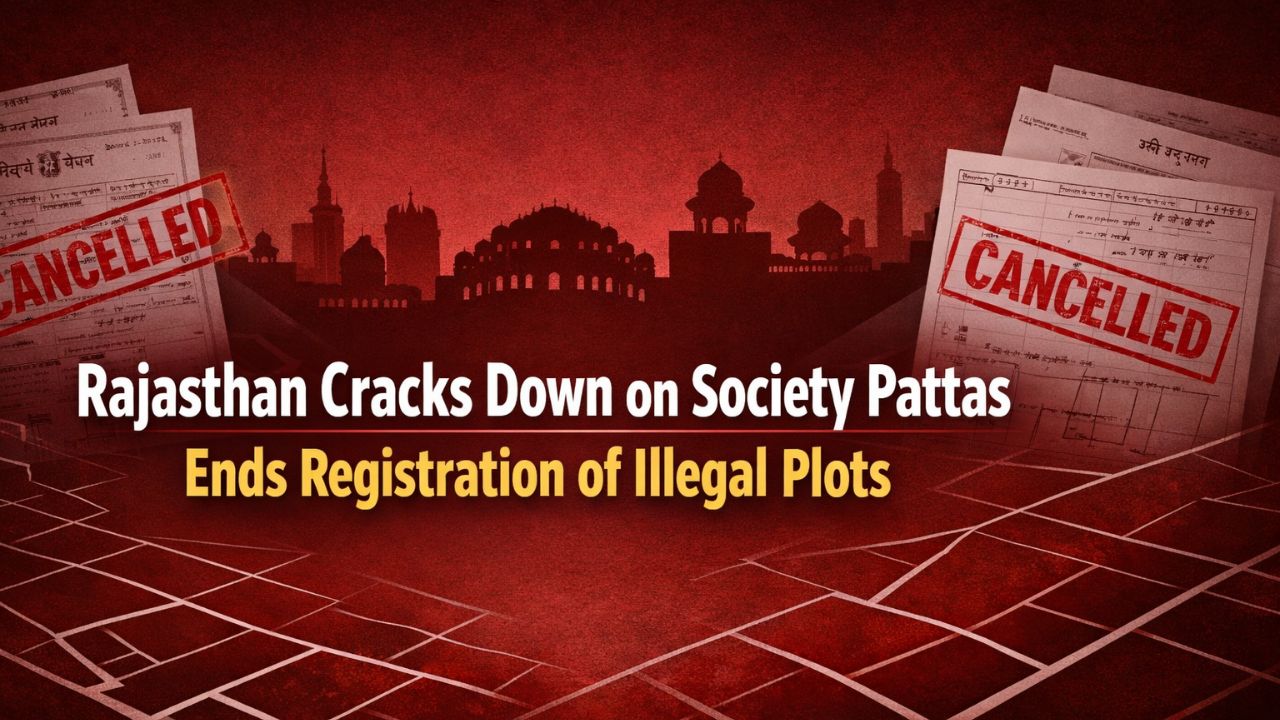
The Rajasthan government has finally drawn a hard line. Sub-registrars have been strictly prohibited from registering any sale deeds based on society-issued pattas. In simple words, if the land doesn’t meet legal planning and conversion norms, it won’t be registered—no exceptions.
This step is being seen as a long-overdue correction rather than a sudden shock. Industry experts openly admit this ban should have come a decade ago.
Years of Red Flags and Ignored Warnings
The warning signs were always there. Homebuyers filed complaints. Courts saw repeated litigation. Audit reports flagged irregularities year after year. Yet, society pattas continued to slip through the cracks, quietly legitimised through registrations.
The result? A mushrooming of unauthorised colonies around Jaipur, especially along Ajmer Road and Kalwar Road, where plots were sold without approved layouts or land-use conversion.
Impact on Innocent Buyers
For buyers, the damage was real and lasting. Many believed they owned legal property, only to later discover their plots were not recognised by any civic authority. No drainage. No water connection. No electricity approval. Ownership without rights—like having a car without keys.
These areas remained outside the development ecosystem, leaving families stuck between legal battles and broken dreams.
Introduction of 90-A Conversion Norms
Under the new regime, all such land must undergo 90-A conversion before any registration. This process brings multiple authorities to the table—the revenue department, town planning officials, and JDA. They verify land-use conversion, layout approval, road width norms, and compliance with the Jaipur Master Development Plan.
Only after clearing these checks will the Stamps and Registration Department allow a sale deed to be registered.
What This Means Going Forward
For future buyers, this move is a protective shield. It shifts responsibility from individuals to institutions, ensuring transparency and legality before money changes hands. For developers and societies, it sends a clear message: follow the rules or stay out of the market.
Conclusion
The ban on society patta registrations marks a turning point in Rajasthan’s urban planning story. It’s not just about stopping illegal plots—it’s about restoring trust. After years of ignoring red flags, the government has finally chosen regulation over convenience. And for genuine homebuyers, that choice couldn’t have come sooner.
FAQs
1. What is a society patta?
It is an informal ownership document issued by private housing or cooperative societies without statutory approval.
2. Why did the government stop patta-based registrations?
To curb unauthorised colonies, protect buyers, and enforce proper land-use planning.
3. What is 90-A conversion?
A legal process ensuring land-use approval, layout clearance, and compliance with development plans.
4. Which areas were most affected by illegal pattas?
Jaipur’s peripheral zones like Ajmer Road and Kalwar Road saw major unauthorised developments.
5. Is this good for property buyers?
Yes. It reduces fraud, ensures legal ownership, and guarantees access to civic amenities.







/socialsamosa/media/media_files/2025/08/20/social-media-calender-2025-08-20-14-53-00.jpeg)


