Techqart

Real Estate News

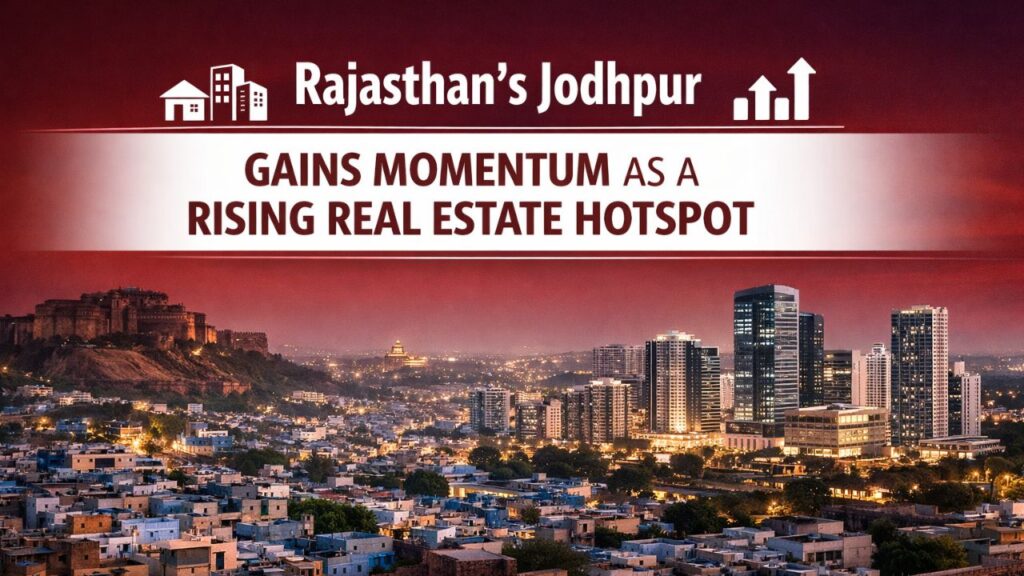
Rajasthan’s Jodhpur Gains Momentum as a Rising Real Estate Hotspot

For decades, Jodhpur was admired for its blue-painted homes, royal forts, and slow desert rhythm. Life here moved at its own pace, framed by Mehrangarh Fort and the elegance of Umaid Bhawan Palace. Today, that familiar skyline is quietly changing. Cranes, new roads, and modern buildings are beginning to share space with history. Jodhpur is no longer just a heritage destination. It is emerging as one of Rajasthan’s most promising real estate markets. A City Rooted in Heritage Jodhpur’s identity is deeply tied to culture and royalty. The old city still breathes history through narrow lanes, sandstone havelis, and centuries-old temples. But beyond these walls, change is underway. Areas once considered outskirts are now active construction zones, signaling a city ready to grow without losing its soul. From Heritage City to Housing Hotspot Move from the old quarters toward Pal Road, Shikargarh, Chopasni, or Jhalamand, and a different Jodhpur appears. Here, modern apartments, gated townships, and commercial complexes are rising fast. Developers are blending local stonework and Rajasthani design with contemporary layouts, creating homes that feel rooted yet modern. It is a rare balance, and buyers are responding positively. Location and Connectivity Advantage In real estate, location shapes destiny. Jodhpur sits at a strategic midpoint between Delhi and Gujarat, giving it logistical strength. Improved highways and the upcoming Delhi–Mumbai Expressway are shortening travel times and opening new trade routes. Add direct flights to cities like Delhi, Mumbai, and Bengaluru, and Jodhpur suddenly feels much closer to India’s economic centers. Affordability Driving Demand Compared to Jaipur or major metros, Jodhpur remains affordable. Average property prices still hover around Rs. 3,500 to Rs. 4,500 per square foot in many developing areas. This price advantage is attracting first-time buyers, working professionals, and NRIs looking for long-term appreciation. Many investors see Jodhpur today as Jaipur ten years ago, full of potential and still within reach. Infrastructure Growth and Urban Expansion Jodhpur’s growth is not limited to private projects. Public infrastructure is catching up too. New flyovers, better roads, and ring road developments are improving mobility and encouraging outward expansion. Industrial zones like Boranada and Basni are drawing manufacturing and engineering units, creating jobs and increasing housing demand. Smart City initiatives are further improving water systems, lighting, and digital access. Residential Real Estate Landscape The residential market is becoming diverse. Buyers can choose from compact apartments, mid-range homes, or premium villas. Gated communities with green spaces, clubhouses, and solar features are increasingly popular. Areas near AIIMS and IIT Jodhpur are seeing strong rental demand from students, doctors, and professionals, making them attractive for income-focused investors. Commercial, Tourism, and NRI Interest Tourism remains Jodhpur’s backbone, and it now supports real estate growth too. Boutique hotels, homestays, and short-term rentals are in demand throughout the year. Platforms like Airbnb have turned homes into steady income sources. For NRIs, Jodhpur offers emotional connection along with solid returns, a combination few cities can match. Challenges and Long-Term Opportunities Like any growing city, Jodhpur has challenges. Some outer areas still need better water supply and civic facilities. Property resale cycles are slower than in metros, so patience is key. Legal checks are essential. But the overall direction is clear and positive. Why Jodhpur’s Real Estate Moment Is Now Jodhpur stands at a rare intersection of affordability, infrastructure growth, and cultural appeal. Prices are rising steadily, not sharply. Development is structured, not rushed. For long-term buyers and investors, this is the window before the city fully arrives on the national real estate map. Conclusion Jodhpur is rewriting its story. What was once known purely for heritage is now stepping confidently into modern urban growth. With improving connectivity, affordable property rates, and rising demand across residential and commercial segments, the city offers a compelling case for long-term real estate investment. Between ancient forts and modern skylines, Jodhpur is quietly building its future, one home at a time.

Rajasthan’s Jodhpur Gains Momentum as a Rising Real Estate Hotspot Read More »

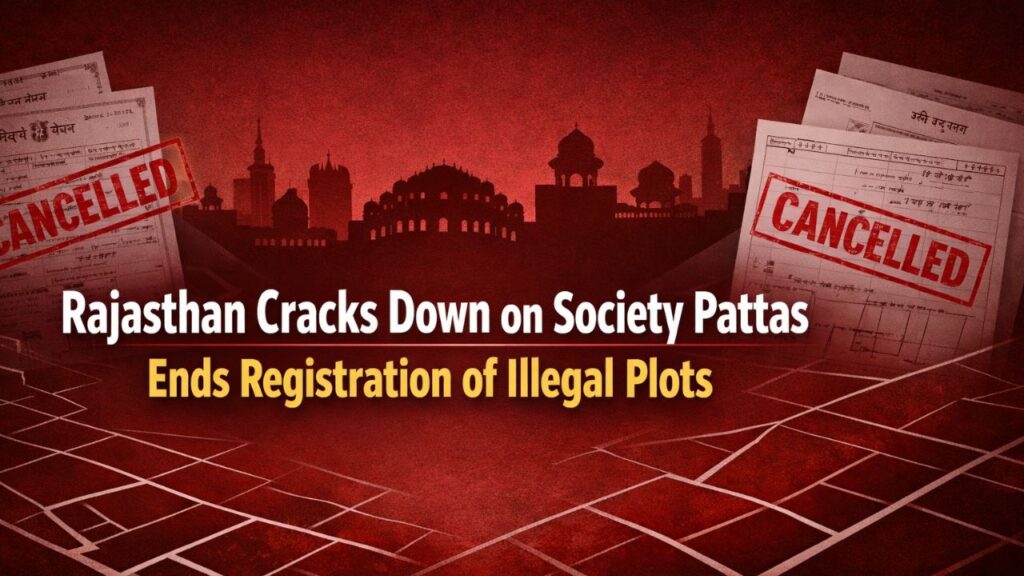
Rajasthan Cracks Down on Society Pattas Ends Registration of Illegal Plots

Rajasthan Cracks Down on Society Pattas Ends Registration of Illegal Plots

Introduction to the Patta Controversy For years, buying a plot on the outskirts of Jaipur felt like a shortcut to affordable homeownership. A neat-looking “patta” from a housing society, a promise of future development, and a price that felt too good to ignore. But as many buyers painfully discovered later, that shortcut often led straight into a legal dead end. A housing society patta is an informal document issued by private or cooperative societies claiming ownership rights over a plot. While it looked official enough, it never carried statutory recognition from authorities like the Jaipur Development Authority (JDA) or local gram panchayats. Still, these pattas flourished because enforcement was weak and demand was high. The Government’s Decisive Move The Rajasthan government has finally drawn a hard line. Sub-registrars have been strictly prohibited from registering any sale deeds based on society-issued pattas. In simple words, if the land doesn’t meet legal planning and conversion norms, it won’t be registered—no exceptions. This step is being seen as a long-overdue correction rather than a sudden shock. Industry experts openly admit this ban should have come a decade ago. Years of Red Flags and Ignored Warnings The warning signs were always there. Homebuyers filed complaints. Courts saw repeated litigation. Audit reports flagged irregularities year after year. Yet, society pattas continued to slip through the cracks, quietly legitimised through registrations. The result? A mushrooming of unauthorised colonies around Jaipur, especially along Ajmer Road and Kalwar Road, where plots were sold without approved layouts or land-use conversion. Impact on Innocent Buyers For buyers, the damage was real and lasting. Many believed they owned legal property, only to later discover their plots were not recognised by any civic authority. No drainage. No water connection. No electricity approval. Ownership without rights—like having a car without keys. These areas remained outside the development ecosystem, leaving families stuck between legal battles and broken dreams. Introduction of 90-A Conversion Norms Under the new regime, all such land must undergo 90-A conversion before any registration. This process brings multiple authorities to the table—the revenue department, town planning officials, and JDA. They verify land-use conversion, layout approval, road width norms, and compliance with the Jaipur Master Development Plan. Only after clearing these checks will the Stamps and Registration Department allow a sale deed to be registered. What This Means Going Forward For future buyers, this move is a protective shield. It shifts responsibility from individuals to institutions, ensuring transparency and legality before money changes hands. For developers and societies, it sends a clear message: follow the rules or stay out of the market. Conclusion The ban on society patta registrations marks a turning point in Rajasthan’s urban planning story. It’s not just about stopping illegal plots—it’s about restoring trust. After years of ignoring red flags, the government has finally chosen regulation over convenience. And for genuine homebuyers, that choice couldn’t have come sooner. FAQs 1. What is a society patta? It is an informal ownership document issued by private housing or cooperative societies without statutory approval. 2. Why did the government stop patta-based registrations? To curb unauthorised colonies, protect buyers, and enforce proper land-use planning. 3. What is 90-A conversion? A legal process ensuring land-use approval, layout clearance, and compliance with development plans. 4. Which areas were most affected by illegal pattas? Jaipur’s peripheral zones like Ajmer Road and Kalwar Road saw major unauthorised developments. 5. Is this good for property buyers? Yes. It reduces fraud, ensures legal ownership, and guarantees access to civic amenities.  

Rajasthan Cracks Down on Society Pattas Ends Registration of Illegal Plots Read More »

New Land Registry Rule in Rajasthan Sparks Claims of Builder Bias

New Land Registry Rule in Rajasthan Sparks Claims of Builder Bias

The Urban Development and Housing (UDH) department’s newly introduced land registry rule in Rajasthan has triggered strong criticism across legal, administrative, and real estate circles. While the regulation is being positioned as a step toward planned development, many argue it quietly shifts power toward large builders and makes land transactions far more difficult for small landowners, farmers, and individual buyers. At the heart of the controversy is a new requirement that prevents the registration of sale deeds unless the land has an official conversion certificate. This certificate changes the land’s status from agricultural to residential or industrial and must be obtained from authorities such as the Jaipur Development Authority (JDA) or other government bodies. Why the Rule Is Under Fire Critics say the rule ignores ground realities. For large developers, obtaining conversion certificates is routine. They have legal teams, consultants, and financial resources to manage approvals without much disruption. For individual landowners, especially farmers, the process is anything but simple. Conversion certificates involve multiple approvals, significant fees, and long waiting periods. Many small landowners lack the time, money, or administrative experience to navigate this system. As a result, they may feel forced to approach big builders to handle land transactions on their behalf, often at unfavorable terms. A senior UDH official, speaking anonymously, noted that the rule creates indirect pressure on landowners to rely on large developers. Instead of enabling fair and open transactions, it risks centralizing control of land deals in the hands of a few major players. Impact on Farmers and Small Landowners For farmers on the outskirts of cities like Jaipur, selling small portions of agricultural land has traditionally been a way to meet financial needs. Under the new rule, even genuine buyers cannot register a purchase unless conversion is completed beforehand. Critics say this effectively blocks independent land sales. Many farmers fear their land will lose immediate market value because buyers are unwilling to take on the uncertainty of conversion. This could leave landowners with limited choices and reduced bargaining power. Problems for Buyers and Existing Plot Owners The rule also affects buyers and current plot owners. Buyers are becoming increasingly cautious, avoiding plots without conversion certificates due to fears of registration rejection and legal complications. Existing plot owners who purchased land legally in the past but did not obtain conversion are now facing resale difficulties. Lawyers working at district collectorate offices warn that this could lead to a rise in informal agreements or stalled transactions, creating more legal disputes rather than reducing them. JDA Expansion Adds to Concerns The timing of the rule has raised further questions. It coincides with the recent expansion of JDA’s jurisdiction to include several villages in the Lajpur district. These areas were already seeing increased real estate activity. The new regulation adds another layer of compliance just as demand was growing, affecting both sellers and buyers. Calls for Review and Clarity Legal experts and policy observers are not entirely against regulation. Their concern lies with how abruptly the rule was enforced and how little clarity was provided to the public. Many landowners only became aware of the requirement when they reached registration offices. Critics suggest the government could have adopted a phased approach, simplified conversion for small plots, or provided exemptions for farmers. Clear guidelines and awareness campaigns could have reduced confusion and backlash. Conclusion While the aim of planned development is valid, the current form of Rajasthan’s new land registry rule appears to place an unequal burden on small landowners while benefiting large builders. Without timely clarification or policy adjustments, the rule risks reshaping the land market in ways that reduce fairness, limit choice, and push independent players to the margins. Development works best when growth is inclusive, not when access depends on size and influence.

New Land Registry Rule in Rajasthan Sparks Claims of Builder Bias Read More »

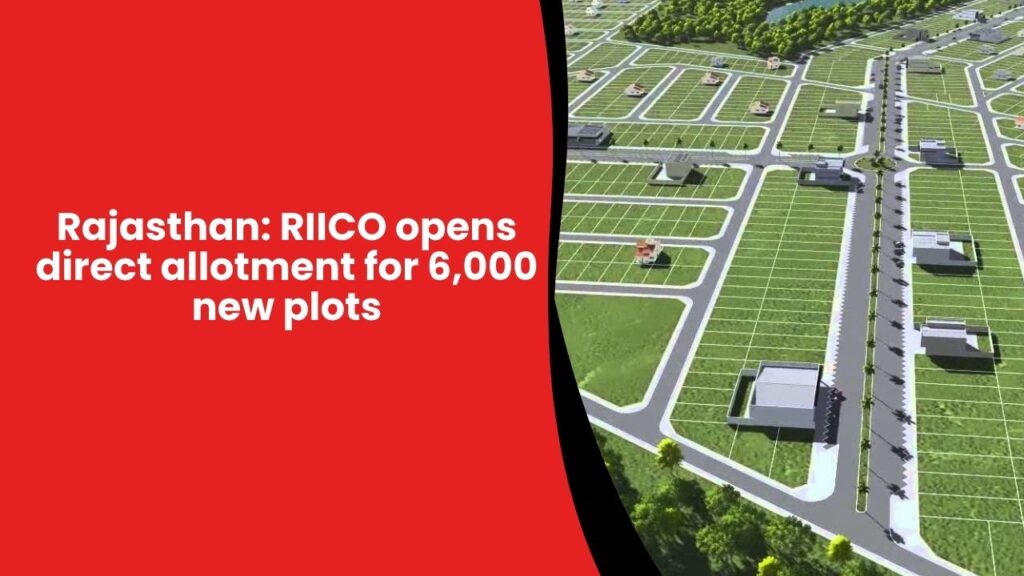
Rajasthan: RIICO Opens Direct Allotment for 6,000 New Industrial Plots

RIICO has launched the sixth phase of its direct allotment scheme for investors who signed MoUs during the Rising Rajasthan Global Investment Summit. This new phase is aimed at speeding up industrial development and giving committed investors easier access to industrial land. Application Window The window for applications is open until October 14, allowing MoU holders to apply online for plots across Rajasthan’s industrial areas. Availability of Plots In this phase, RIICO is offering: 6,000 industrial plots Across 100 industrial areas With special reservations for SC/ST entrepreneurs, women, ex-servicemen, and persons with disabilities This ensures equal opportunity and wider participation from various investor groups. Response to Previous Phases The fifth phase, held in September, saw strong interest: 322 applications for 224 plots Highest demand areas included Kunj Beiharipura (jajpur), Boranada Extension, and Malsisar (Jhunjhunu) Overall, across earlier phases: 1,450 applications were received for 990 plots 707 plots have been allotted 213 applications are still under process Allotment Rules RIICO has outlined a simple and transparent allotment system: 1. For plots up to 50,000 sq. metres If only one applicant applies → Direct allotment If multiple applicants apply → E-lottery on October 19 2. For plots above 50,000 sq. metres Allotment depends on the applicant’s eligibility, project feasibility, and land requirement EMD and Application Requirements Applicants must submit: 5% of the total premium amount as EMD (Earnest Money Deposit) Complete online application with accurate project and personal details Important Note for Applicants RIICO has clearly stated that the plot will be allotted only in the same name as mentioned in the MoU. Investors must ensure their registration details match the MoU to avoid delays or rejection. Conclusion RIICO’s sixth phase of direct allotment is a major opportunity for MoU investors to secure industrial land in prime and emerging locations across Rajasthan. With a transparent process, special reservations, and structured allotment rules, the state aims to further boost its industrial growth and support upcoming businesses.

Rajasthan: RIICO Opens Direct Allotment for 6,000 New Industrial Plots Read More »

Jaipur’s Development Authority Shifts Lease Process Online

Jaipur’s Development Authority Shifts Lease Process Online

The Jaipur Development Authority (JDA) has rolled out a major digital upgrade by moving its entire lease and lease deed issuance process online. With this transformation, citizens no longer need to visit the JDA office physically. From applying for a lease to receiving the final document, everything can now be completed digitally. This step aims to make the process faster, more transparent, and highly convenient for Jaipur’s residents. A Complete Digital Transformation According to JDA Commissioner Anandhi, this initiative ensures complete accessibility and transparency. The entire workflow—from the initial application to the issuance of the final lease document—is now fully paperless. This marks a significant shift in how government services are delivered in the city. A senior JDA official highlighted that applicants can now complete Aadhaar-based e-KYC online and even sign documents digitally. The system also supports online stamping and stamp duty payments, eliminating the need for physical stamp papers. This not only saves time but also removes the dependency on third-party agents. Key Features of the New Online Lease System 1. Aadhaar-Based e-KYC Identity verification is now smoother than ever. Applicants can authenticate their details with Aadhaar instantly, reducing delays. 2. Digital Signature Support Applicants can sign all required documents digitally, ending the need for manual signatures or physical visits. 3. Online Stamp Duty Payment The platform enables users to make all stamp duty payments online. Physical stamp papers are no longer required, even in leasehold-to-freehold conversions. 4. Fully Paperless Workflow Every step—from application submission to final lease issuance—is handled digitally, ensuring a clean, secure, and faster experience. Leasehold to Freehold Conversion Simplified One of the most impactful changes is the digitization of leasehold-to-freehold conversions. Previously, this process often required multiple visits, physical stamps, and signatures. Now, the entire procedure is online and paperless, including digital verification and authentication by JDA officials. This simplifies the process and improves efficiency for thousands of property owners. How the New Process Works The new online system is designed to be simple and user-friendly: Users create an account on the JDA portal. They fill out the online application form. Aadhaar-based e-KYC verifies identity instantly. All required documents can be uploaded digitally. Stamp duty payments are made online. The final lease or lease deed is issued digitally and can be downloaded anytime. Benefits for Citizens This shift offers multiple advantages: Convenience: No need to visit the JDA office, saving time and effort. Transparency: Applicants can track their process online with no hidden steps. Cost Savings: Eliminates travel and unnecessary expenses. Faster Processing: Digital workflows reduce delays and speed up approvals. A Step Forward for Digital Governance By eliminating paperwork and manual processes, JDA has made a strong move toward modern governance. Digital records are easier to manage, less prone to errors, and enhance overall administrative efficiency. Conclusion JDA’s transition to a completely online lease and lease deed system is a major win for citizens. With features like digital signatures, e-KYC, online stamp duty payments, and a fully paperless workflow, Jaipur is stepping confidently into a more efficient and transparent digital future.    

Jaipur’s Development Authority Shifts Lease Process Online Read More »

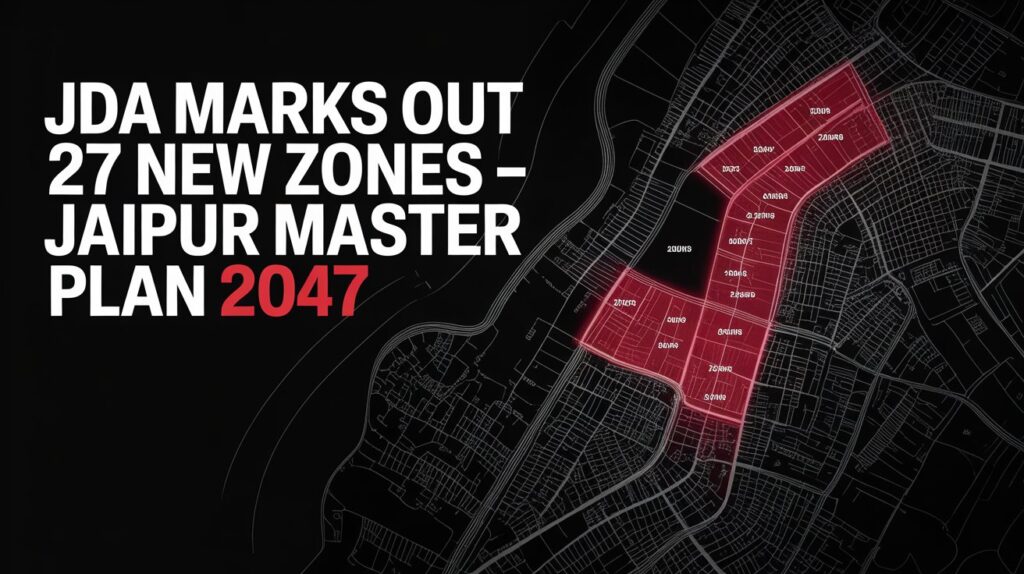
JDA Marks Out 27 New Zones in the Jaipur Master Plan 2047

JDA Marks Out 27 New Zones in the Jaipur Master Plan 2047

The Jaipur Development Authority (JDA) has taken a major step under the Jaipur Master Plan 2047, officially marking out 27 new zones to streamline development and manage the city’s rapid expansion. This restructuring aims to ensure better planning, efficient administration, and smoother urban growth as Jaipur continues to evolve into a modern metropolitan city. Why the Sudden Increase in Zones? Jaipur earlier had 18 zones, but with the city spreading rapidly toward the outskirts, the current zoning wasn’t enough to handle the growing population and development needs. To address this gap, JDA increased the number of zones by 11. However, due to merging four Prithvi (PRN) zones into two, the final count stands at 27. Officials confirmed that new maps were sanctioned and the zones were officially demarcated recently, marking a significant milestone in the city’s long-term development plan. Core City Zones Remain the Same Interestingly, the heart of Jaipur—Zones 1 to 8—remains unchanged. These areas include some of the most developed and busy parts of the city such as: C-Scheme Bypass 200-Feet Bypass ISKCON Road Jhalana Bypass These zones fall within Jaipur’s old ring road and already have a well-established urban infrastructure. Since they are structurally sound and optimally planned, no major alterations were needed. What’s New in the Updated Zones? Most changes appear in the middle and outer zones, especially where Jaipur is expanding the fastest. Zones 9, 10, and 11 – Minor Yet Important Updates Zone 9: New villages from Sanganer Tehsil have been added. Zone 10: Several Bassi Tehsil villages now fall under JDA planning. Zone 11: Small boundary adjustments were made to align with new planning requirements. These changes reflect Jaipur’s increasing urban footprint, pulling previously rural belts into the scope of planned development. Big Additions in Zones 15–25 The biggest expansion is seen in Zones 15 to 25, where most new villages included in Master Plan 2047 are located. These zones represent Jaipur’s next major growth corridors, expected to see major residential, commercial, and infrastructural development over the coming decades. Impact on Urban Development The new zoning is expected to transform how Jaipur grows. With smaller, more manageable zones, JDA will now be able to: Deliver faster administrative services Ensure balanced and organised development Improve infrastructure like roads, drainage, water supply, and public spaces Prevent unplanned and haphazard expansion For residents and investors, this change signals more clarity, smoother construction approvals, and improved future property value—especially in newly added zones. Administrative Changes by JDA With more zones comes more responsibility. Until new officers are appointed, the existing divisional commissioners handling the original 18 zones have been temporarily assigned the responsibility of all 27 zones. JDA also confirmed that soon, individual Deputy Commissioners (DCS) will be appointed for each zone to improve efficiency and resolve issues faster. Conclusion The restructuring of Jaipur into 27 zones marks a new chapter in the city’s growth story. By expanding zone boundaries, adding new villages, and improving administrative distribution, the JDA is preparing Jaipur for a more organised and sustainable future. This zoning upgrade is not just a technical change—it’s a foundation for transforming Jaipur into a smarter, better-planned, and more livable city by 2047.  

JDA Marks Out 27 New Zones in the Jaipur Master Plan 2047 Read More »

Jaipur Smart City Plan to Be Expanded Across Six More Rajasthan Towns

Jaipur Smart City Plan to Be Expanded Across Six More Rajasthan Towns

Introduction Rajasthan is gearing up for a major smart city push. After experimenting with Jaipur as a model Smart City, the state government has decided to expand the same development approach to six more towns. The goal? To bring modern infrastructure, better roads, smart governance, and improved public services to smaller but fast-growing cities. What’s Being Planned? The government has selected six towns that are now set to adopt the Jaipur-style Smart City model. These towns were chosen based on their growth potential, population, and need for upgraded urban systems. This expansion will include improvements such as: Smarter roads and transport Better waste and water management Digital governance Heritage conservation Cleaner and safer public spaces Jaipur’s Progress: Mixed but Promising Jaipur has already completed several smart city projects—smart roads, surveillance systems, upgraded drainage, and beautified public spaces. However, many projects are still pending due to funding delays, coordination issues, and long construction timelines. Despite this, the Jaipur model has given the government enough confidence to scale the idea to more towns. How the Expansion Will Work The new Smart City plans will follow a mixed funding approach involving: State government Urban local bodies Private partnerships Local authorities will implement and maintain projects, ensuring they align with local needs. Benefits Residents Can Expect Once the upgrade begins, residents in these towns will start experiencing: Cleaner surroundings Better traffic flow Ease of accessing online government services A boost in tourism and business Overall improved quality of life Smart city development doesn’t happen overnight, but even early steps can bring visible improvements. Challenges That Still Remain The biggest challenge is finishing Jaipur’s pending projects while starting work in new towns. Funding gaps, administrative delays, and technical issues need tighter planning this time. Conclusion Expanding the Jaipur Smart City model to six more Rajasthan towns is a big step toward transforming how urban life looks across the state. If executed well, this can bring cleaner, smarter, and more efficient cities for lakhs of residents. Rajasthan is moving towards a future where every town—not just the capital—can enjoy the benefits of modern urban development. FAQs 1. Which towns are included in the expansion? The plan includes six additional towns in Rajasthan selected based on their growth potential, population, and infrastructure needs. 2. Why is the expansion happening despite unfinished projects? The government aims to leverage Jaipur’s learnings while ensuring other towns do not lag behind in urban development. 3. How will the Smart City expansion benefit residents? Residents will experience improved infrastructure, better digital services, enhanced safety, and overall better quality of life. 4. Who will manage these new Smart City projects? Local municipal bodies, along with state-level agencies and private partners, will oversee implementation. 5. When will the new cities start seeing development? Implementation will begin in phases over the next few years, with some towns seeing early-stage improvements soon.  

Jaipur Smart City Plan to Be Expanded Across Six More Rajasthan Towns Read More »