
/socialsamosa/media/media_files/2025/08/20/leaderboard-new-3-2025-08-20-14-33-18.png)

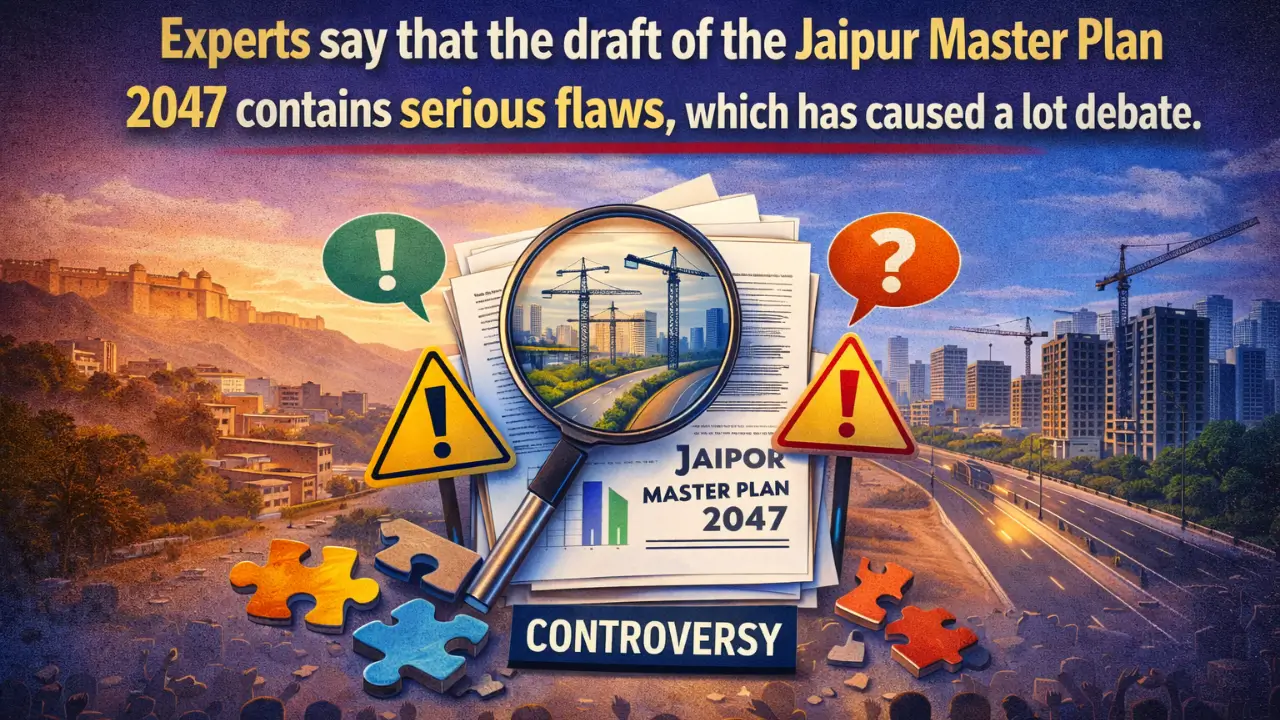
Urban planners are presently looking closely at the draft of the Master Plan 2047. For many years to come, this plan will guide the city’s expansion and infrastructure. They are talking about important concerns that could affect the growth of the city.
The draft plan doesn’t fully follow the central government’s planning framework, especially the Urban and Regional Development Plans Formulation and Implementation (URDPFI) principles, which is a serious problem. These rules show Indian cities how to flourish in a way that is well planned and will last for a long time.
Experts Sound the Alarm on a Vision That Is Too Big
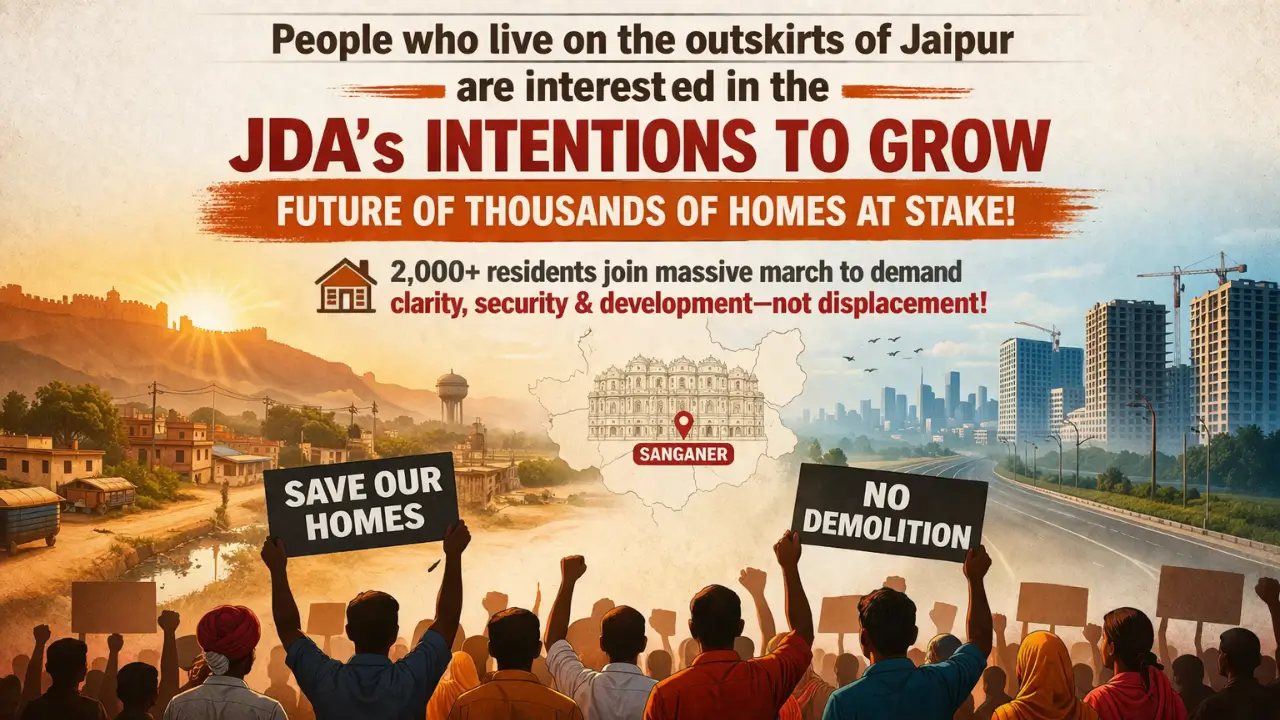
One of the greatest problems that experts have brought up is how vast the proposed expansion is. The Jaipur Development Authority (JDA) wants to make its territory bigger than it is now. It plans to cover an area of around 6,500 square kilometers.
Experts say that even though development may look like improvement, the numbers don’t quite line up. There are just 23 people per hectare in the design, which is much less than the 175 people per hectare needed for a metropolis like Jaipur. This is because there are big, empty tracts of land.
Planners think that this disparity shows that the land isn’t being used correctly and makes them worry that the expansion is either impossible or too much.
Making it less clear what the difference is between cities and farmland
The draft plan has another big problem: it blends cities and towns. Urban planning has historically maintained these areas apart so that growth may be directed and resources can be used properly. But the current draft wants to mix things up, which might make it hard for the government and infrastructure to operate together.
Experts say that this kind of approach could lead to uneven growth because it doesn’t fully address the demands of urban or rural areas. Jaipur might not wind up being a well-planned city; instead, it could be a patchwork of badly built neighborhoods.
Infrastructure vs. Growth: A Gap That Is Getting Bigger
The main problem isn’t only technical; it’s also practical. If a city grows too quickly without the right infrastructure, it could put a lot of stress on things like highways, sewage systems, and water supplies.
Urban planners say that the draft as it is today is more about making the area bigger than getting the infrastructure ready. If you don’t plan carefully or have clear ideas on how to carry them out, this could lead to urban sprawl instead of organized growth.
The problem gets worse when more people move to Jaipur. A metropolis that will have to house millions of people in the next few decades can’t afford to have planning holes right now.
Legal and planning concerns make things harder.
The Rajasthan High Court’s involvement made the fight much more newsworthy. Some parts of JDA’s growth are currently on hold.
This legal delay has made people talk more about whether the plan has to be completely rethought before it goes into effect.
What will happen to Jaipur in the future?
The goal of Jaipur’s Master Plan 2047 is to keep the city’s old world beauty while turning it into a contemporary, well connected city. Experts, on the other hand, say that the plan might not work if it doesn’t keep to national goals and focus on growth based on infrastructure.
People who live there and care about the place still want to know:
Will this strategy really help Jaipur get ready for the future, or will it make things harder?
There is still a lot of disagreement, but one thing is clear: people are making plans for Jaipur’s future right now, and every little thing counts.






/socialsamosa/media/media_files/2025/08/20/social-media-calender-2025-08-20-14-53-00.jpeg)


