Techqart

jaipur

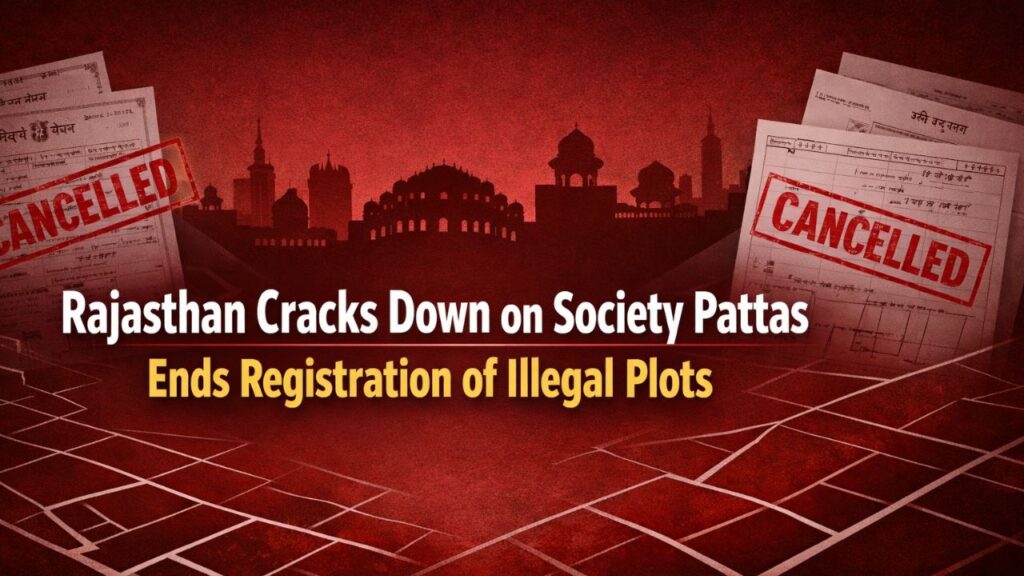
Rajasthan Cracks Down on Society Pattas Ends Registration of Illegal Plots

Rajasthan Cracks Down on Society Pattas Ends Registration of Illegal Plots

Introduction to the Patta Controversy For years, buying a plot on the outskirts of Jaipur felt like a shortcut to affordable homeownership. A neat-looking “patta” from a housing society, a promise of future development, and a price that felt too good to ignore. But as many buyers painfully discovered later, that shortcut often led straight into a legal dead end. A housing society patta is an informal document issued by private or cooperative societies claiming ownership rights over a plot. While it looked official enough, it never carried statutory recognition from authorities like the Jaipur Development Authority (JDA) or local gram panchayats. Still, these pattas flourished because enforcement was weak and demand was high. The Government’s Decisive Move The Rajasthan government has finally drawn a hard line. Sub-registrars have been strictly prohibited from registering any sale deeds based on society-issued pattas. In simple words, if the land doesn’t meet legal planning and conversion norms, it won’t be registered—no exceptions. This step is being seen as a long-overdue correction rather than a sudden shock. Industry experts openly admit this ban should have come a decade ago. Years of Red Flags and Ignored Warnings The warning signs were always there. Homebuyers filed complaints. Courts saw repeated litigation. Audit reports flagged irregularities year after year. Yet, society pattas continued to slip through the cracks, quietly legitimised through registrations. The result? A mushrooming of unauthorised colonies around Jaipur, especially along Ajmer Road and Kalwar Road, where plots were sold without approved layouts or land-use conversion. Impact on Innocent Buyers For buyers, the damage was real and lasting. Many believed they owned legal property, only to later discover their plots were not recognised by any civic authority. No drainage. No water connection. No electricity approval. Ownership without rights—like having a car without keys. These areas remained outside the development ecosystem, leaving families stuck between legal battles and broken dreams. Introduction of 90-A Conversion Norms Under the new regime, all such land must undergo 90-A conversion before any registration. This process brings multiple authorities to the table—the revenue department, town planning officials, and JDA. They verify land-use conversion, layout approval, road width norms, and compliance with the Jaipur Master Development Plan. Only after clearing these checks will the Stamps and Registration Department allow a sale deed to be registered. What This Means Going Forward For future buyers, this move is a protective shield. It shifts responsibility from individuals to institutions, ensuring transparency and legality before money changes hands. For developers and societies, it sends a clear message: follow the rules or stay out of the market. Conclusion The ban on society patta registrations marks a turning point in Rajasthan’s urban planning story. It’s not just about stopping illegal plots—it’s about restoring trust. After years of ignoring red flags, the government has finally chosen regulation over convenience. And for genuine homebuyers, that choice couldn’t have come sooner. FAQs 1. What is a society patta? It is an informal ownership document issued by private housing or cooperative societies without statutory approval. 2. Why did the government stop patta-based registrations? To curb unauthorised colonies, protect buyers, and enforce proper land-use planning. 3. What is 90-A conversion? A legal process ensuring land-use approval, layout clearance, and compliance with development plans. 4. Which areas were most affected by illegal pattas? Jaipur’s peripheral zones like Ajmer Road and Kalwar Road saw major unauthorised developments. 5. Is this good for property buyers? Yes. It reduces fraud, ensures legal ownership, and guarantees access to civic amenities.  

Rajasthan Cracks Down on Society Pattas Ends Registration of Illegal Plots Read More »

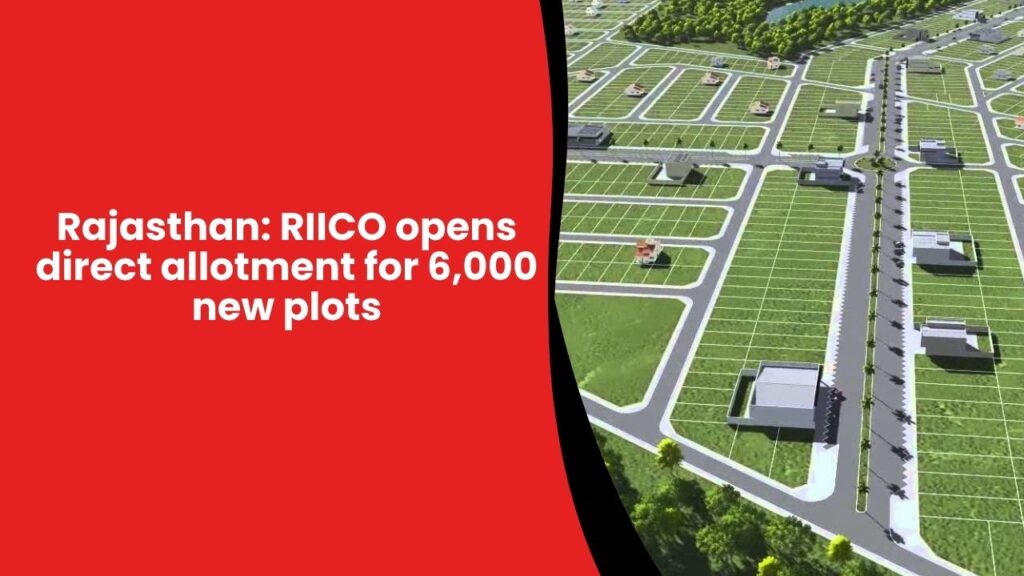
Rajasthan: RIICO Opens Direct Allotment for 6,000 New Industrial Plots

RIICO has launched the sixth phase of its direct allotment scheme for investors who signed MoUs during the Rising Rajasthan Global Investment Summit. This new phase is aimed at speeding up industrial development and giving committed investors easier access to industrial land. Application Window The window for applications is open until October 14, allowing MoU holders to apply online for plots across Rajasthan’s industrial areas. Availability of Plots In this phase, RIICO is offering: 6,000 industrial plots Across 100 industrial areas With special reservations for SC/ST entrepreneurs, women, ex-servicemen, and persons with disabilities This ensures equal opportunity and wider participation from various investor groups. Response to Previous Phases The fifth phase, held in September, saw strong interest: 322 applications for 224 plots Highest demand areas included Kunj Beiharipura (jajpur), Boranada Extension, and Malsisar (Jhunjhunu) Overall, across earlier phases: 1,450 applications were received for 990 plots 707 plots have been allotted 213 applications are still under process Allotment Rules RIICO has outlined a simple and transparent allotment system: 1. For plots up to 50,000 sq. metres If only one applicant applies → Direct allotment If multiple applicants apply → E-lottery on October 19 2. For plots above 50,000 sq. metres Allotment depends on the applicant’s eligibility, project feasibility, and land requirement EMD and Application Requirements Applicants must submit: 5% of the total premium amount as EMD (Earnest Money Deposit) Complete online application with accurate project and personal details Important Note for Applicants RIICO has clearly stated that the plot will be allotted only in the same name as mentioned in the MoU. Investors must ensure their registration details match the MoU to avoid delays or rejection. Conclusion RIICO’s sixth phase of direct allotment is a major opportunity for MoU investors to secure industrial land in prime and emerging locations across Rajasthan. With a transparent process, special reservations, and structured allotment rules, the state aims to further boost its industrial growth and support upcoming businesses.

Rajasthan: RIICO Opens Direct Allotment for 6,000 New Industrial Plots Read More »

Jaipur’s Development Authority Shifts Lease Process Online

Jaipur’s Development Authority Shifts Lease Process Online

The Jaipur Development Authority (JDA) has rolled out a major digital upgrade by moving its entire lease and lease deed issuance process online. With this transformation, citizens no longer need to visit the JDA office physically. From applying for a lease to receiving the final document, everything can now be completed digitally. This step aims to make the process faster, more transparent, and highly convenient for Jaipur’s residents. A Complete Digital Transformation According to JDA Commissioner Anandhi, this initiative ensures complete accessibility and transparency. The entire workflow—from the initial application to the issuance of the final lease document—is now fully paperless. This marks a significant shift in how government services are delivered in the city. A senior JDA official highlighted that applicants can now complete Aadhaar-based e-KYC online and even sign documents digitally. The system also supports online stamping and stamp duty payments, eliminating the need for physical stamp papers. This not only saves time but also removes the dependency on third-party agents. Key Features of the New Online Lease System 1. Aadhaar-Based e-KYC Identity verification is now smoother than ever. Applicants can authenticate their details with Aadhaar instantly, reducing delays. 2. Digital Signature Support Applicants can sign all required documents digitally, ending the need for manual signatures or physical visits. 3. Online Stamp Duty Payment The platform enables users to make all stamp duty payments online. Physical stamp papers are no longer required, even in leasehold-to-freehold conversions. 4. Fully Paperless Workflow Every step—from application submission to final lease issuance—is handled digitally, ensuring a clean, secure, and faster experience. Leasehold to Freehold Conversion Simplified One of the most impactful changes is the digitization of leasehold-to-freehold conversions. Previously, this process often required multiple visits, physical stamps, and signatures. Now, the entire procedure is online and paperless, including digital verification and authentication by JDA officials. This simplifies the process and improves efficiency for thousands of property owners. How the New Process Works The new online system is designed to be simple and user-friendly: Users create an account on the JDA portal. They fill out the online application form. Aadhaar-based e-KYC verifies identity instantly. All required documents can be uploaded digitally. Stamp duty payments are made online. The final lease or lease deed is issued digitally and can be downloaded anytime. Benefits for Citizens This shift offers multiple advantages: Convenience: No need to visit the JDA office, saving time and effort. Transparency: Applicants can track their process online with no hidden steps. Cost Savings: Eliminates travel and unnecessary expenses. Faster Processing: Digital workflows reduce delays and speed up approvals. A Step Forward for Digital Governance By eliminating paperwork and manual processes, JDA has made a strong move toward modern governance. Digital records are easier to manage, less prone to errors, and enhance overall administrative efficiency. Conclusion JDA’s transition to a completely online lease and lease deed system is a major win for citizens. With features like digital signatures, e-KYC, online stamp duty payments, and a fully paperless workflow, Jaipur is stepping confidently into a more efficient and transparent digital future.    

Jaipur’s Development Authority Shifts Lease Process Online Read More »

JDA Marks Out 27 New Zones in the Jaipur Master Plan 2047

JDA Marks Out 27 New Zones in the Jaipur Master Plan 2047

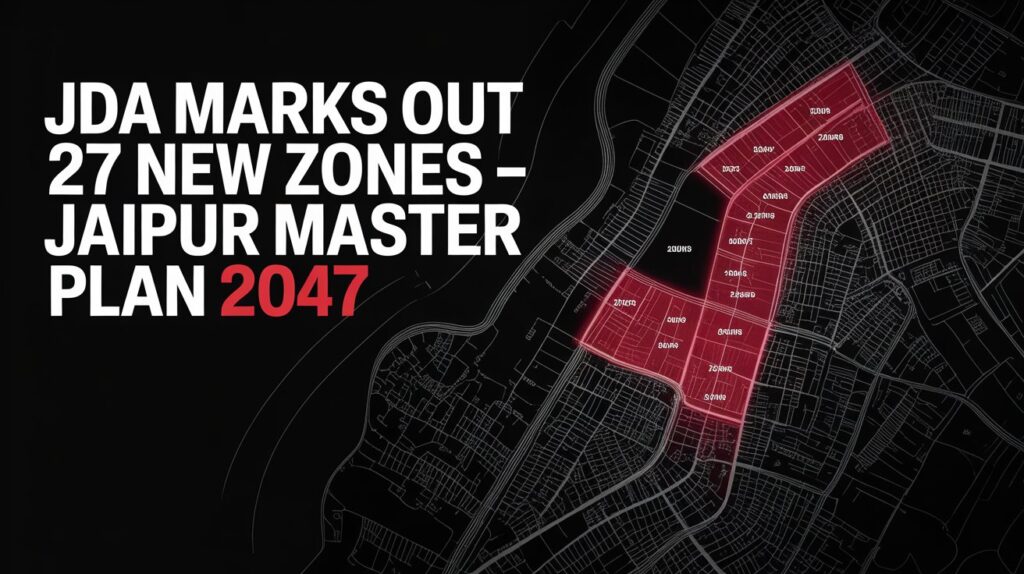
The Jaipur Development Authority (JDA) has taken a major step under the Jaipur Master Plan 2047, officially marking out 27 new zones to streamline development and manage the city’s rapid expansion. This restructuring aims to ensure better planning, efficient administration, and smoother urban growth as Jaipur continues to evolve into a modern metropolitan city. Why the Sudden Increase in Zones? Jaipur earlier had 18 zones, but with the city spreading rapidly toward the outskirts, the current zoning wasn’t enough to handle the growing population and development needs. To address this gap, JDA increased the number of zones by 11. However, due to merging four Prithvi (PRN) zones into two, the final count stands at 27. Officials confirmed that new maps were sanctioned and the zones were officially demarcated recently, marking a significant milestone in the city’s long-term development plan. Core City Zones Remain the Same Interestingly, the heart of Jaipur—Zones 1 to 8—remains unchanged. These areas include some of the most developed and busy parts of the city such as: C-Scheme Bypass 200-Feet Bypass ISKCON Road Jhalana Bypass These zones fall within Jaipur’s old ring road and already have a well-established urban infrastructure. Since they are structurally sound and optimally planned, no major alterations were needed. What’s New in the Updated Zones? Most changes appear in the middle and outer zones, especially where Jaipur is expanding the fastest. Zones 9, 10, and 11 – Minor Yet Important Updates Zone 9: New villages from Sanganer Tehsil have been added. Zone 10: Several Bassi Tehsil villages now fall under JDA planning. Zone 11: Small boundary adjustments were made to align with new planning requirements. These changes reflect Jaipur’s increasing urban footprint, pulling previously rural belts into the scope of planned development. Big Additions in Zones 15–25 The biggest expansion is seen in Zones 15 to 25, where most new villages included in Master Plan 2047 are located. These zones represent Jaipur’s next major growth corridors, expected to see major residential, commercial, and infrastructural development over the coming decades. Impact on Urban Development The new zoning is expected to transform how Jaipur grows. With smaller, more manageable zones, JDA will now be able to: Deliver faster administrative services Ensure balanced and organised development Improve infrastructure like roads, drainage, water supply, and public spaces Prevent unplanned and haphazard expansion For residents and investors, this change signals more clarity, smoother construction approvals, and improved future property value—especially in newly added zones. Administrative Changes by JDA With more zones comes more responsibility. Until new officers are appointed, the existing divisional commissioners handling the original 18 zones have been temporarily assigned the responsibility of all 27 zones. JDA also confirmed that soon, individual Deputy Commissioners (DCS) will be appointed for each zone to improve efficiency and resolve issues faster. Conclusion The restructuring of Jaipur into 27 zones marks a new chapter in the city’s growth story. By expanding zone boundaries, adding new villages, and improving administrative distribution, the JDA is preparing Jaipur for a more organised and sustainable future. This zoning upgrade is not just a technical change—it’s a foundation for transforming Jaipur into a smarter, better-planned, and more livable city by 2047.  

JDA Marks Out 27 New Zones in the Jaipur Master Plan 2047 Read More »